
Collage and the Kaleidoscope of Memory

Updated: Jan 17

Two Ravens sing of the Sun ( take II), 2025
Bobby Padilla
Collage on Crescent board, 12"x18

Self Portrait, 2025
Bobby Padilla
Collage on acrylic panel, 12"x12"
Art has always evolved alongside the tools and materials artists use. Collage art, often misunderstood or underestimated, stands as a powerful form of two-dimensional expression. Artist like Pablo Picasso, Georges Braque and Kurt Schwitters brought the technique into focus during cubism. During the Dada movement, Hannah Hoch, Man Ray, and Max Ernst were integral to the art form. From Matisse and his vibrant cutouts, to Romare Bearden and the Harlem Renaissance, to modern contemporaries like Barbara Kruger, Kara Walker, Wangechi Mutu used collage as the primary method for social commentary. The list can go on and on. It's not just about collecting and arranging materials to create texture and composition. It demands vision, intention, and a deep understanding of narrative art. The challenge of collage art is as real and demanding as mastering pencil or brush techniques. This post explores the validity of collage art, its parallels with traditional painting, and how AI art now joins the conversation as a new tool for creative expression.
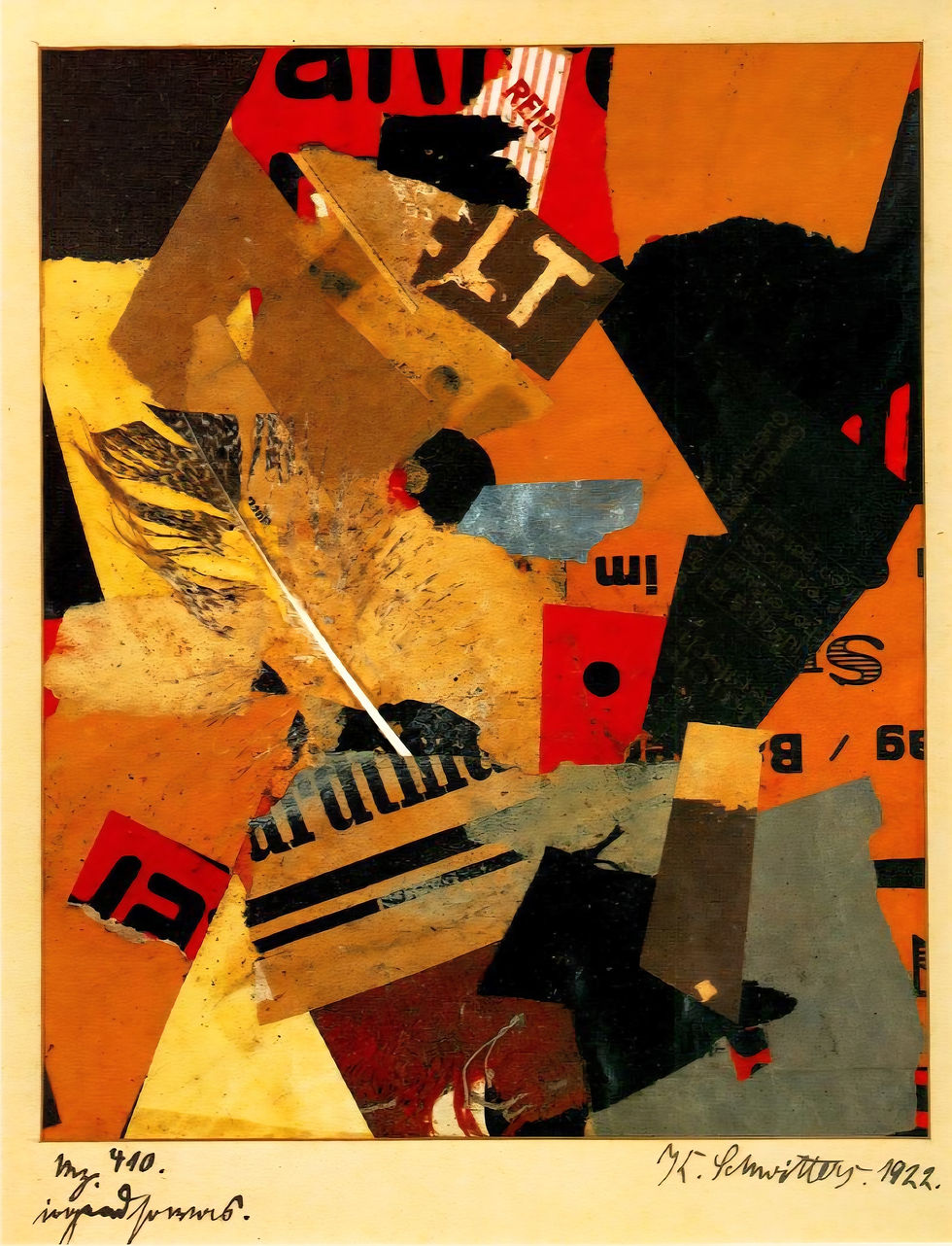
Something or Other, 1922
Kurt Schwitters, Collage

The Family ( around the Dining Table), 1975
Romare Bearden, Collage

Untitled, 2010
Cindy Sherman, Collage

Family Tree, 2012
Mutu Wangechi, Collage
The Artistic Challenge Behind Collage Art
Collage art requires more than just assembling scraps of paper or fabric. The artist must gather, edit, and compose endless source material into a cohesive whole. This process demands a unique skill set:
Curating materials that complement each other visually and conceptually
Creating texture that invites touch and visual exploration
Balancing color and form to guide the viewer’s eye
Building a narrative that resonates emotionally or intellectually
These steps mirror the decisions a painter makes when mixing colors or layering brushstrokes. The difference lies in the tools, but the creative process remains deeply thoughtful and deliberate.
For example, I might spend weeks selecting vintage photographs, torn book pages, and painted elements to build a collage that tells a story about memory and identity. The final piece, though made from fragments, becomes a unified painting in its own right.

Have you Ever Heard the Sound of Blue Laughing It's Way Through the Sky (version II), 2025
Bobby Padilla
Collage on Masonite, 6"x6"
Collage Art and the Painter’s Soul
Many collage artists, including those who identify as painters at heart, describe their work as paintings. The choices in texture, color, or composition reflect artistic sensibilities. The glue and paper become as vital as the brush and canvas. Oh, let's not forget about the physical space you need. A conventional studio is, well, what you think it is. Easels, drawing tables, paints, brushes, finished work, works in progress, you get the picture. Speaking strictly for myself, my studio is all that plus what could only be described as a library explosion within an art studio.
I have stacks of old books and magazines everywhere with pages ripped out of them. Piles of craft paper and old drawings, and sticker books on every free surface. Even when organized, it still looks like a poorly run flee market.
Anyhow, this perspective challenges the notion that collage is a lesser or secondary art form. Instead, it highlights collage art as a complex, layered practice that demands patience and precision. The artist’s vision drives the work, not just the materials.

Buzzing Through the Telephone, 2025
Bobby Padilla
Collage on Masonite, 6"x6"

HDONCI (version II), 2025
Bobby Padilla
Collage on Masonite, 6"x6"
The Debate Around AI Art and Artistic Authenticity
The conversation around AI art in 2026 echoes past debates about new technologies in art. When photography first emerged, critics claimed painting was dead. When computers entered the creative space, similar fears arose. Yet, true artists saw opportunity rather than threat.
AI art now offers new ways to gather, edit, and compose source material. It becomes another tool in the artist’s toolbox, much like scissors, glue, or brushes. The challenge remains the same: create meaningful, visually interesting narrative art.
Some purists argue AI art is cheating, but this view overlooks the artist’s role in guiding the process. AI does not replace the artist’s vision or decision-making. Instead, it supports new forms of creativity and expression.

Defend the Ocean - Attack the Sky, 2025
Bobby Padilla
Collage on Masonite, 6"x6"
Blending AI and Mixed Media in Collage Art
Today, many artists combine AI-generated elements with traditional collage techniques. This blend allows for:
Expanding the range of source material beyond physical scraps
Experimenting with new textures and patterns generated digitally
Speeding up the editing process while maintaining artistic control
Creating complex narratives that mix human and machine creativity
For instance, an artist might use AI to generate abstract backgrounds or unique textures, then physically layer these prints with hand-painted details and found objects. The result is a hybrid collage painting that bridges past and future. AI allows an immediate response. That's to say that with the right phrasing (I'll get to that in a minute), one can get an AI generated image. If you don't like it, you can get a variation. In fact, numerous versions of the same theme. Conceptually, you can do the same thing in a sketchbook spending hours on preliminary drawings that will lead the direction of your next piece. AI does this in a fraction of the time.
I mentioned phrasing. Just because AI does the heavy lifting when imagining and bringing a concept to life, you have to articulate just the right prompt to have that image generate. It's not as easy as it sounds. Sure, if you're looking to do a "pretty sunset at the beach", that's an easy enough prompt to get you exactly what you want. When you're a surrealist and you want "the dream of a sunset hugging the beach", you can spend a considerable amount of time phrasing and rephrasing to get what you want. Even then, AI can and will misinterpret some of the words in your phrasing.
Don't get me wrong, I still work in my conventional sketchbook and enjoy the tactile nature of drawing. But, using a sketchbook solely to map out a piece of art, painting or other wise, is just plain antiquated in my humble opinion. Then, trying to blend the universe of collage source materials with AI generated images to work in lock step with an idea you imagined is a challenge. So, to that end, my sketch may consist of a conventional thumbnail drawing, a collection of print media (that I may or may not use), digital files and several surfaces that I'll build the painting on. It's a process I'm getting comfortable with.

A Shaman Remembers, 2025
Bobby Padilla
Collage on mirror, 12"x12"
Embracing New Tools Without Losing Artistic Integrity
This brings me to content and meaning. The key to using AI art alongside collage art lies in maintaining the artist’s vision and narrative. Tools should serve the story, not dictate it. Whether using scissors or algorithms, the artist’s choices shape the final work.
Artists who embrace AI and mixed media find new ways to express ideas relevant to today’s culture. They create narrative art that reflects the complexity of memory, identity, and technology. This approach honors tradition while pushing boundaries.
Final Thoughts on Collage, AI, and Artistic Vision
Collage art deserves recognition as a valid and demanding form of two-dimensional art. And for the most part it has. It requires the same dedication, skill, and vision as painting with brush or pencil. The artist’s soul shines through in every carefully chosen fragment and color decision.
AI art is the latest tool expanding the artist’s possibilities. It challenges old definitions but ultimately enriches the creative process. For artists and non-artists alike, understanding this evolution opens new ways to appreciate and engage with art.
If you create or enjoy collage art, consider how new tools like AI might inspire your next piece. The future of narrative art is wide open, shaped by vision and the courage to explore new methods.


My 100 blog post!